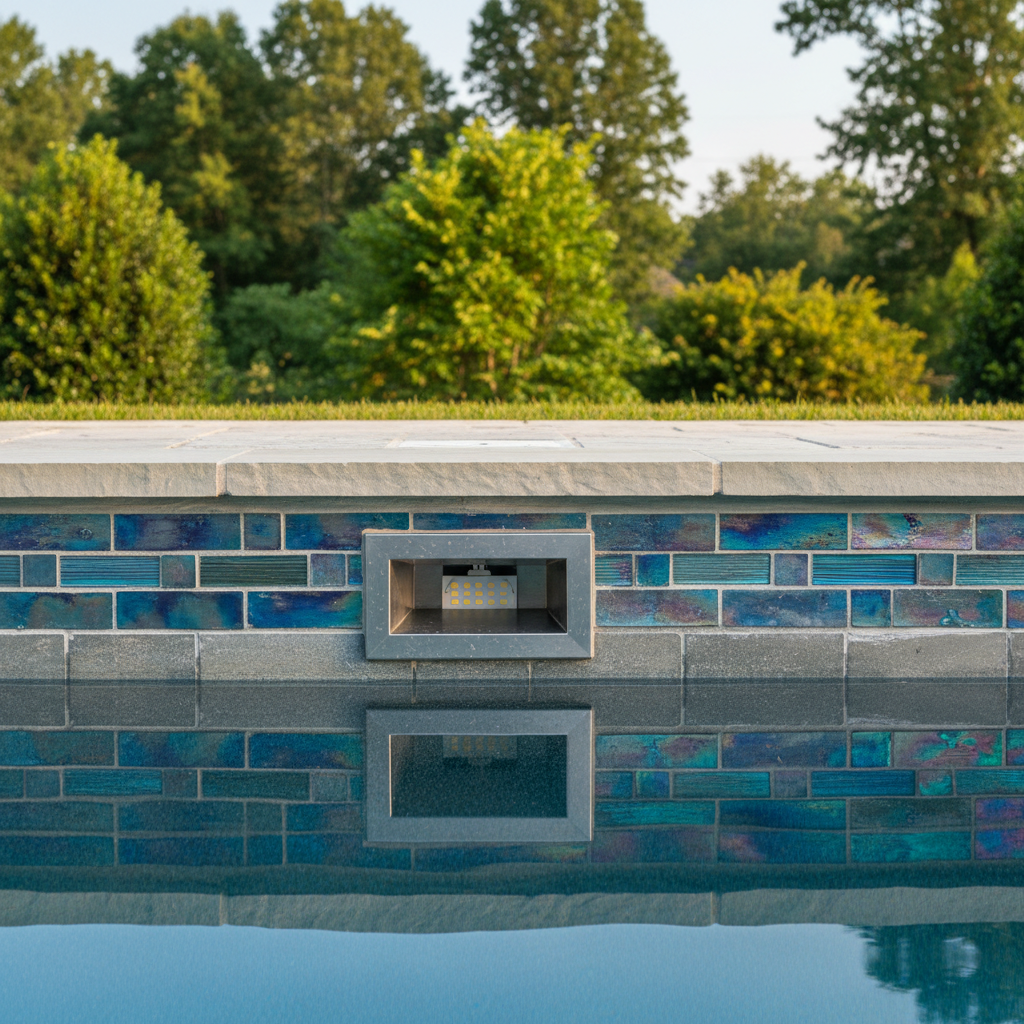
So, you've got a pool, or maybe you're just dreaming of one, and now you're thinking about lighting. It's more than just seeing where you're going after dark, isn't it? It's about setting a mood, making your backyard safer, and honestly, making that pool just pop at night. Homeowners around here, especially those with pools in neighborhoods like Stuart Park or up near the mountains, often ask me the same kinds of questions. Let's dig into them.
What are my main options for pool lighting?
You've pretty much got three big choices: incandescent, LED, and fiber optic. Incandescent lights are your classic, old-school bulbs. They're bright, they give off a warm glow, but they burn out quicker and suck up a lot more electricity. Think of them like the light bulbs we all used in our houses before LEDs came along.
LEDs, or Light Emitting Diodes, are really the way to go these days. They're super energy-efficient, last ages, and you can get them in all sorts of colors. Most modern pools, or even older ones getting a facelift, are switching to LEDs. Sure, they cost more upfront, but you'll save money in the long run on electricity and not having to change bulbs all the time. Plus, who doesn't love being able to change their pool's color with a tap on their phone?
Fiber optic used to be pretty popular, but you don't see it as much anymore for the main pool lighting. It works by using one light source that shoots light through fiber optic cables to different spots in the pool. It's neat for special effects or maybe lighting the perimeter, but when it comes to actually lighting up the water, LEDs have really taken over.
Can I put lights in an existing pool?
You bet. It's one of the most common upgrades we do, actually. If you've got an older pool with no lights, or just one dim incandescent, adding new lights can totally change the look and feel of your backyard. It's not always a simple plug-and-play, especially if we need to run new conduit or cut into concrete, but it's definitely something we can handle. We've done plenty of retrofits for folks looking to modernize their setup.
The process usually means draining the pool, putting in the new light fixtures, and then running the necessary electrical lines back to your equipment pad. Sometimes, if you've got a vinyl liner pool, we can even get it done without draining everything, as long as we're careful. It really just depends on how your specific pool was built and what kind of lights you're aiming for.
How much does pool lighting cost?
Ah, the million-dollar question, right? And like most things with pools, there's no single answer. For a basic incandescent replacement, you might be looking at a few hundred bucks for the bulb and the work. But if you're talking about adding brand new LED lights to a pool that never had them, or upgrading several old lights to new color-changing LEDs, the price tag will climb.
A single LED light fixture itself can run anywhere from $500 to $1,500, and that's before installation. Installation involves electrical work, sometimes digging trenches, and making sure everything is sealed up tight. For a full LED upgrade on an existing pool with, say, two main lights, you could be looking anywhere from $2,000 to $5,000, depending on how complicated the job is. It's an investment, but the energy savings and how much better your pool looks really do pay off over time.
How many lights do I need for my pool?
This all depends on your pool's size and shape, and how bright you want it. For a typical rectangular pool, maybe 15x30 feet, one good LED light at the deep end is often enough to light up the whole thing. If your pool is bigger, or has an unusual shape, or if you want it really bright and evenly lit, you might need two or even three lights.
We generally aim to spread the light out evenly, so you don't end up with dark spots. Sometimes, a combination of a main pool light and some smaller accent lights in steps or shallow areas works best. When I come out for a consultation, I'll walk around your pool with you, and we can figure out the best spot and number of lights for your specific setup. We'll also think about your landscaping and how much ambient light you already have, you know?
Are pool lights safe? What about electricity and water?
This is a really important one, and it's exactly why you should always have a qualified professional handle any electrical work around your pool. Modern pool lights are built with safety in mind. They run on low voltage (usually 12V or 24V) and are sealed to keep water out. The main power source usually sits in a junction box away from the pool, and a transformer steps the higher household voltage down to that safe low voltage for the lights.
The National Electrical Code (NEC) has strict rules for pool wiring and lighting for a reason. You absolutely need proper grounding, bonding, and GFCI protection. Please, never try to DIY this stuff unless you're a licensed electrician who specializes in pools. It's just not worth the risk. Here at Oasis Pools, we make sure every installation meets or even exceeds these safety standards.
How long do LED pool lights last?
This is one of the coolest things about LEDs. While an incandescent bulb might last 1,000 to 5,000 hours, an LED pool light can keep going for anywhere from 20,000 to 50,000 hours. What does that mean for you? It means you probably won't have to replace the bulb for 10-20 years, maybe even longer, depending on how often you use your pool at night. That's a huge difference in maintenance and cost over the life of your pool.
Of course, nothing lasts forever. Sometimes the electronics can quit, or a seal might fail, but generally, the lifespan is fantastic. It's why they're such a smart investment, especially with the humid summers and occasional heavy rains we get here in Cleveland. You want something reliable that can stand up to the elements, right?
Can I control my pool lights with my phone?
Yep, absolutely. Most new LED pool lighting systems come with smart controls. You can get a controller that hooks up to your home Wi-Fi, and then you just download an app on your smartphone or tablet. From there, you can turn the lights on or off, change colors, set schedules, and sometimes even sync them with music. It's pretty slick, I have to say.
If you're upgrading an older system, we can often integrate new lights into an existing automation system you might have for your pump or heater, or we can install a standalone smart controller just for the lights. It really makes managing your pool so much easier and more convenient. No more fumbling for switches in the dark!
Getting your pool lighting just right isn't only about how it looks; it's about safety, how much you use it, and really enjoying your backyard oasis to the fullest. If you've got more questions, or you're ready to explore options for your pool, just give us a call at Oasis Pools. We're always happy to help our neighbors here in Cleveland.